Thigh cellulite treatment
Cellulite on the thighs can be particularly noticeable on the backs and outer sides. Here is why it develops and how Dr. Timestit tailors treatment to each part of the thigh.
What causes thigh cellulite?
Like the buttocks, the thighs have a layer of fat beneath the skin and connective-tissue bands linking the skin to deeper structures. When these bands pull inwards while fat cells push outwards, the surface becomes uneven. On the thighs, this is often more visible when standing or under direct light.
Hormones, genetics, circulation and weight changes all play a role. Thigh cellulite affects young, slim and active women too: it is not simply a reflection of lifestyle.
The backs, outer and inner thighs
Cellulite can look different in each area. The backs of the thighs often show small, closely spaced dimples. On the outer thighs, dimpling may sit alongside localised fat, while the inner thighs have thinner skin that may also be lax. Mapping each area separately avoids a one-size-fits-all approach.
How is thigh cellulite treated?
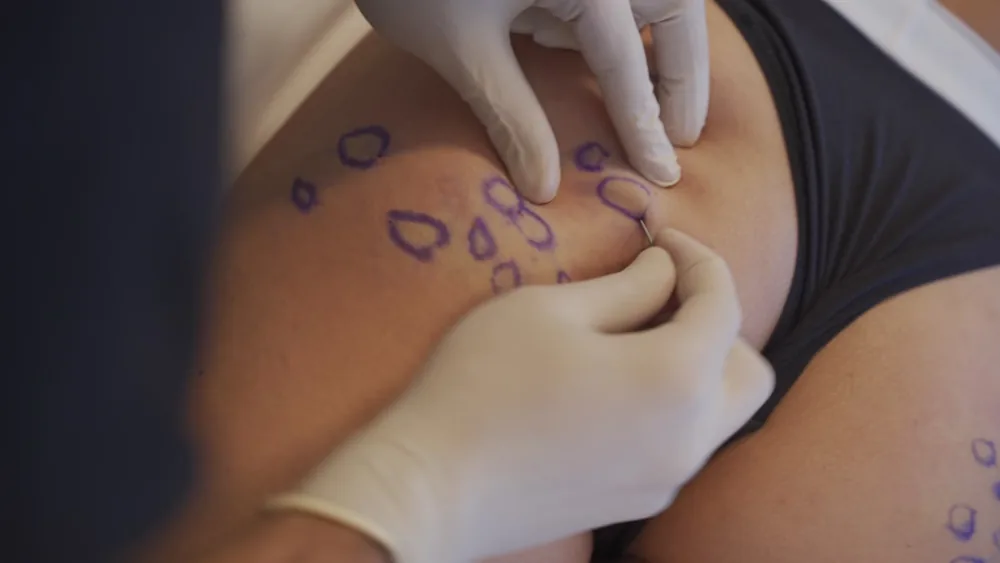
During the mapping consultation, Dr. Timestit assesses the severity of cellulite in each part of the thigh and marks the dimples. He then selects a combination of methods, which may include device-based treatment to improve skin texture and, where appropriate, hyaluronic acid to fill selected dimples. He performs the treatments himself, and most patients return to their routine the same day.
A follow-up appointment after the course is an opportunity to review the result and discuss any adjustments or future maintenance.
Who is it suitable for?
Women with mild to pronounced thigh cellulite who would like to improve the appearance of their skin. Treatment is not offered during pregnancy or breastfeeding, and suitability is always confirmed through a medical assessment. Results vary, and no treatment guarantees complete removal of cellulite.